The Bethlehem Gottesacker (1742)

On September 6, 2025 the community of Bethlehem, PA celebrated the inscription of nine buildings and the God’s Acre onto the UNESCO World Heritage list as one of four transnational locations of the Moravian Church Settlements site.

The nomination document includes the criterion that “Moravian Church cultural tradition is characterised by the quest for an ordered communal Christian life, as well as by recurrent experiences of migration and a high level of mobility, the settlement congregations acting as places of support for local outreach and missionary work. The continuing presence of Moravian Church communities in each settlement ties the historic structures to the ongoing life of the larger Moravian Church community, which is based on the ideal of a universal fellowship of believers that cuts across all boundaries of nationality, ethnicity, gender, culture, and class.” (Executive Summary)

One of the elements of the World Heritage site is God’s Acre, the burial site started in 1742 by Nicholas von Zinzendorf on the occasion of the sudden death of a visitor to Bethlehem, Johannes Mรผller from New York. The site contains over 2700 graves of both Moravians and “Strangers”, friends of the community who has asked to be buried there. It follows the pattern established at earlier Moravian congregations where graves are arranged by choir (the homosocial groupings based on gender, marital status and age) and not by family. Each stone is flat, reflecting the Moravian ideal of democracy in death.

Gods Acre allows a visitor to witness something extraordinary. The orderly, flat stones map the global Moravian community that nearly 300 years ago stretched from Greenland to the Caribbean. Here the cultural bridges are visible: Native Americans who spoke multiple languages and navigated between worlds, serving as interpreters and teachers; European Moravians rest alongside African converts, enslaved and free,ย  who carried their own rich traditions into this new spiritual community; Indigenous community members who maintained connections to their Nationโ€™s heritage while embracing the Moravian faith created a fabric of radical integration that was revolutionary for its time. All of these diverse lives lie together in this cemetery, their flat stones embodying the Moravian principle of the “democracy of death.”

Visiting this place, an 18th-century world, where global networks of faith, trade, and cultural exchange converged in a single community, becomes a physically manifest. Each stone marks not only an individual life, but also a node in a vast web of relationships that spanned continents and cultures. This network was recorded in the “Catalog of Baptized Indians” (1742-1764) complied by Peter Boehler, John Heckewelder and finally Joseph Traeger and found in the Moravian Archives, Bethlehem Pa. (Item # 313.4) In a data visualization classes at Bucknell, this archival document became the basis for a database from which network diagrams of the relationships present in that data could be created. An example designed by CS student Khoi Le can be seen here:
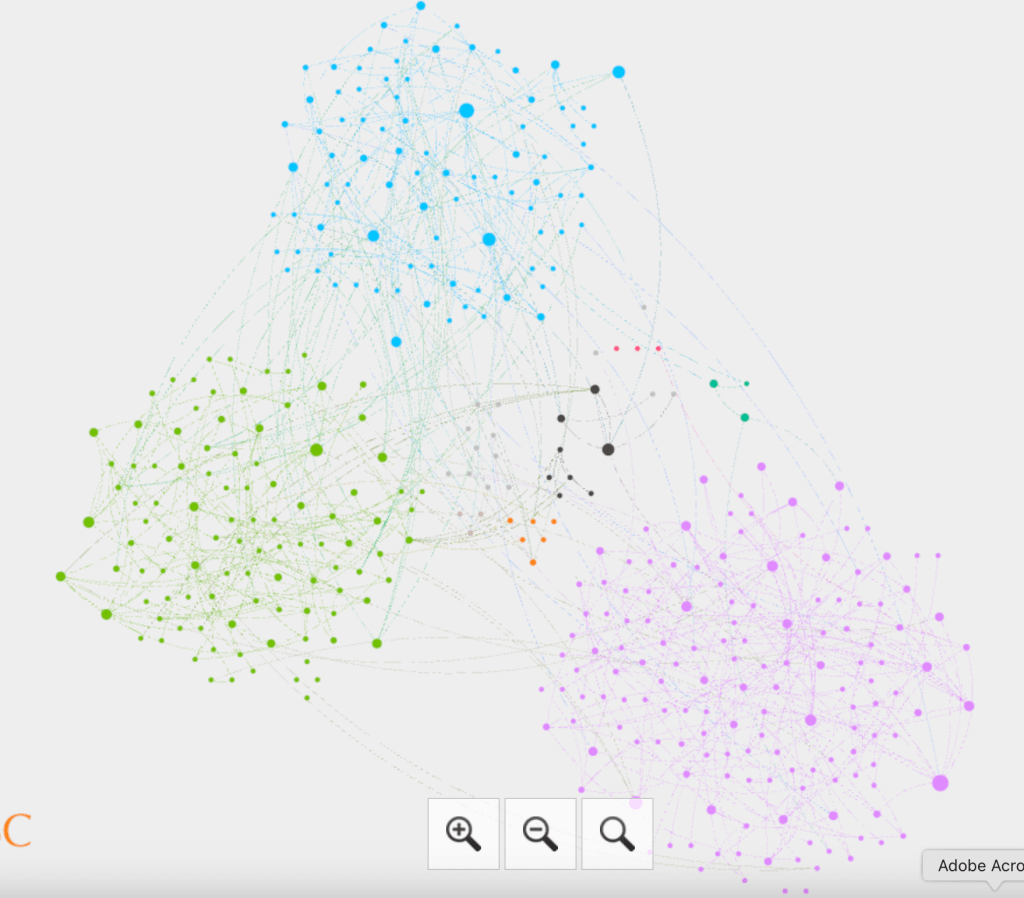
If you click on this image you can access the interactive visualization.

What makes Gods Acre truly remarkable is how it embodies what UNESCO recognized as “outstanding universal value to humanity.” The most powerful of these is the principle of equality and human dignity, manifested in what the Moravians called the “democracy of death.” Every person buried here – whether European settler, Native American convert, or African Moravian – receives the same simple, flat headstone. Social status, wealth, race, and background become irrelevant in this final resting place, creating a radical statement of human equality that remains profound today.

This physical equality reflects the broader Moravian commitment to what UNESCO identified as the “ageless values of education, equality, industry, integrity, and spirituality” that shaped this community from 1741 onward. The cemetery’s organization by choir rather than family demonstrates their democratic principles in action – people were grouped by life stage and spiritual community rather than blood relations or social hierarchy. This created a space where a Native American teacher might rest beside a German craftsman, where converted Indigenous families were fully integrated into the community’s spiritual and social structure.
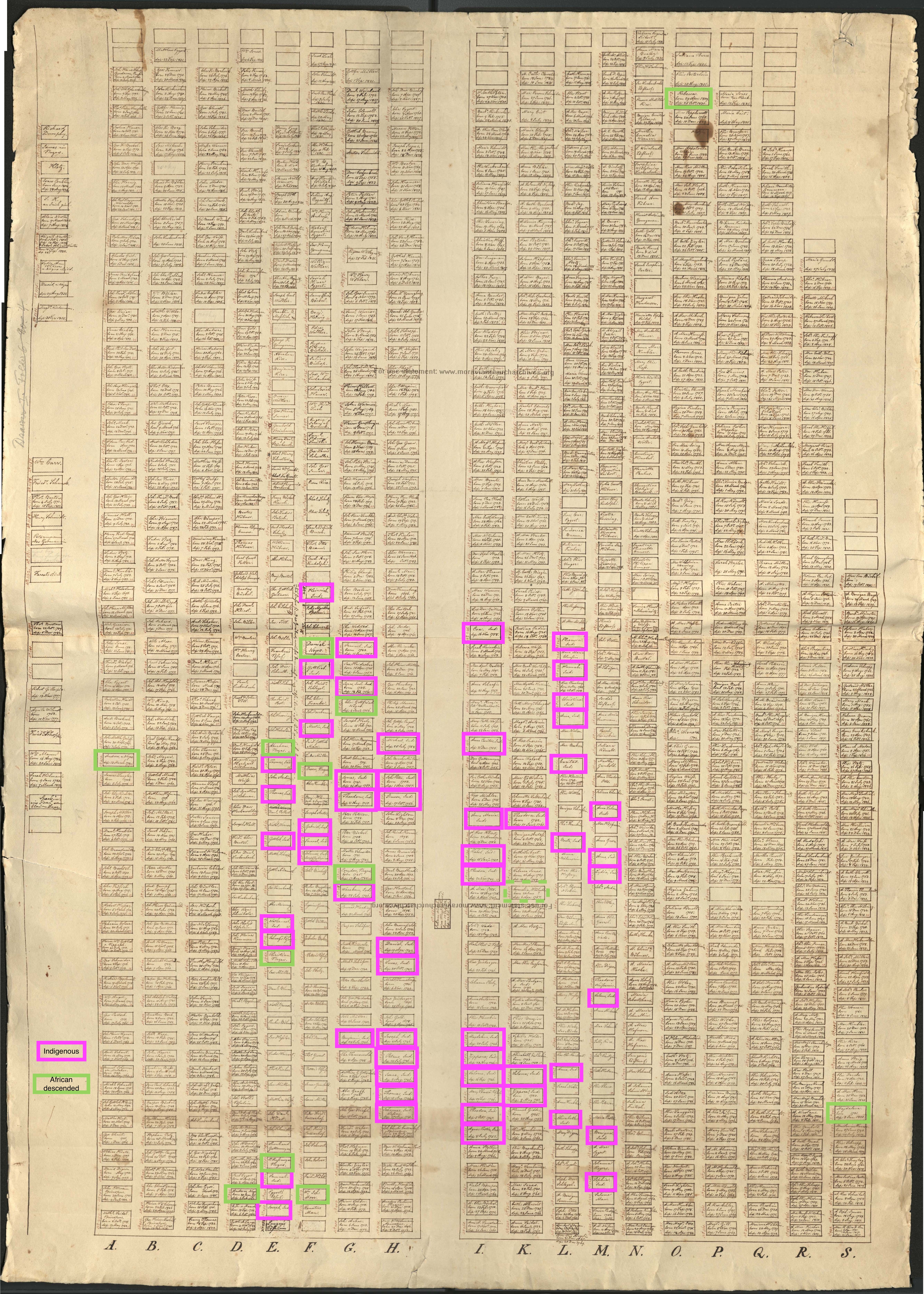
African and African descended peoples and Native American peoples buried in Gods Acre. Click on the image to enlarge it

The Moravians’ early vision for community represented a movement toward democratization that offered the same standard of living to all members and prioritized the common welfare over individual advantage. In Gods Acre, these values become tangible and permanent, creating a space where visitors can literally walk among the evidence of a community that successfully built bridges across cultural, racial, and linguistic differences. These universal human aspirations for equality, dignity, and community that recognize shared humanity regardless of earthly distinctions remain as relevant today as they were nearly three centuries ago.

Some of the life stories of those buried here:

Isaac โ€“ Wampanoag/Mahican (Grave #203)

Born at Shekomeko, Isaac’s early life was marked by both loss and the care of the Moravian community. His father was baptized by Brother Rauch at Oley in 1742, but following his father’s death, eight-year-old Isaac found a home in Bethlehem’s Single Brethren’s House, where Brother Cammerhof baptized him. In 1750, he traveled to Gnadenhรผtten to reunite with his mother, Rebecca, and remained with her until her passing. Afterward, other Native American members of the Gnadenhรผtten community looked after the orphaned boy. At sixteen, Isaac briefly returned to the Native American community in Wyoming Valley before making his way back to Gnadenhรผtten. The 1755 attack on that settlement forced him to flee once more to Bethlehem’s Single Brethren’s House. Suffering from consumption, Isaac died there at just eighteen years old, his short life a testament to the resilience of those who navigated between worlds during a tumultuous period in colonial Pennsylvania. 

Eva โ€“ Mohican (Grave #241)

Eva was an elderly Mahican widow from Shekomeko whose faith journey spanned some of the most turbulent years of the Moravian mission. Baptized by Peter Boehler in 1743, she and her husband Nicodemus first moved to Bethlehem before settling in Gnadenhรผtten, where Nicodemus served as Elder. Following his death in 1747, Eva remained in the Gnadenhรผtten community for eight years until the attack of 1755 forced her to flee. The elderly woman escaped into the woods and, after three days, arrived safely in Bethlehem. In 1758, she relocated to Nain, where she lived out her final years. Eva died at approximately eighty years of age, and in a testament to the bonds she had forged within the Native American Christian community, she was accompanied to God’s Acre by fellow Native converts and laid to rest by Brother Mack. Her life story reflects the extraordinary perseverance of Native American Moravians who maintained their faith through displacement, loss, and danger.

Michael โ€“ Minnisink (Grave #235)

Michael was a great warrior of the Minnisink nation whose appearance told the story of his former life. His face bore intricate tattoos marking his victories in battle: a snake, a totem pole adorned with faces, two crossed spears on one cheek, and the head of a boar on his jawline. Yet this warrior’s life took a dramatic turn when he was “awakened” to the Christian faith at Shekomeko in 1742. Four years later, he came to Bethlehem, and subsequently moved to Gnadenhรผtten, where he remained until the 1755 attack forced him to flee once more. Michael found refuge in Bethlehem’s Single Brethren’s House, living among the community until his death in 1758 at the age of seventy-two. He died surrounded by his Native American Brethren, who had walked alongside him through his remarkable transformation. To the Moravian community, Michael stood as a powerful example of spiritual conversionโ€”a warrior whose facial markings spoke of one life, while his peaceful final years testified to another. .

Simeon โ€“ Lenape (1686-1756) (Grave #209)

Born at Oak Harbor, New Jersey, Simeon was a renowned healer among his people, respected for his skill as a traditional doctor. His path to the Moravian community began when he moved to Meniolagomeka and encountered Moravian missionaries there. He later settled in Gnadenhรผtten, where his life was changed by the attack of 1755. Nearly blind, the elderly Simeon managed to crawl into the surrounding woods and hide. This experience may have deepened his spiritual conviction, for after reaching the safety of Bethlehem, he chose to be baptized. Simeon lived only one more year, dying in Bethlehem in 1756 at the age of seventy. .

Anna Maria โ€“ Lenape (Grave #151)

Anna Maria’s story is one of determination to return home in her final hours. She had been baptized at Bethlehem alongside her husband, Tobias, and their infant daughter, joining the Moravian community as a family. When she fell gravely ill while living in the forest across the Delaware River, Anna Maria made a request that members of her nation carry her back to Bethlehem. Anna Maria’s desire to die in Bethlehem was fulfilled and she passed away on October 28, 1753.

Anna Caritas (Nanny) โ€“ Shawnee (Grave #196)

Anna Caritas holds the distinction of being celebrated as the “First Fruit of the Shawnee” in the Moravian mission, though her path to Bethlehem was marked by hardship and displacement. While pregnant, she was captured by the Mohawk in North Carolina and taken to the Wyoming Valley, where she lived among the Shawnee community there. Seeking a new life, she left to live among white settlers near the site where Bethlehem would eventually be established, and in 1747 she moved into the growing Moravian town itself. Anna Caritas found work in the washhouse, as she had not learned to spin, and the following year she was baptized by Johannes de Watteville. She married Joseph, a Black brother in the community, and the couple relocated to Fredericktown to build their life together. When war troubles erupted, Anna Caritas briefly took refuge with the Sisters in Bethlehem. At her deathbed, the community gathered to sing hymns to her in both German and her native languageโ€”a fitting tribute to a woman whose life had bridged so many worlds. Her story reflects the complex journeys of Native women who navigated captivity, cultural exchange, interracial marriage, and faith during the colonial era.

Elizabeth โ€“ Arawak (Grave #56)

Elizabeth’s presence in Bethlehem’s God’s Acre is a remarkable testament to the far-reaching extent of the Moravian mission. Born among the Arawak people in Berbice, South America, she was baptized by Moravian missionaries in 1748 when she was approximately seventeen years old. The following year, she made the extraordinary journey from South America to Pennsylvania, traveling to Bethlehem with the missionary W. Zander. Her reasons for undertaking such a voyageโ€”whether for further religious education, to escape danger, or to serve the missionโ€”remain unclear, but the distance she traveled speaks to her commitment or the circumstances that compelled her northward. Elizabeth’s time in Bethlehem was brief. She died on June 18, 1750, far from her home and her people. Her story is unusual among those buried in God’s Acre, highlighting the truly international scope of the Moravian community and the diverse paths that brought Native peoples from across the Americas to this small Pennsylvania settlement.

John, alias Tschoop โ€“ Mohican (Grave #62)

Known among his people as Wasamapa, John was a Mohican from Shekomeko near the Hudson River in New York State whose influence extended far beyond his lifetime. Converted by Christian Rauch in 1742, John quickly emerged as a teacher among his people, sharing his faith with fellow Mohicans. When the Christianized Mohican community relocated to Bethlehem in 1745, John made the journey with them, but his life was cut short soon after by smallpox. Despite his brief time in Bethlehem, John’s legacy endured in powerful ways. He was celebrated as the “First Fruit of the Mohicans,” symbolizing the beginning of Christian conversion among his nation and is depicted on the First Fruits painting. His story and character are believed to have inspired James Fenimore Cooper’s portrayal of Chingachgook in the 1826 novel The Last of the Mohicans, ensuring that his life reached far beyond the Moravian community. He is buried next to Bishop Cammerhof.

Peoples of African descent 

Andrew, Ofodobendo Wooma โ€“ Igbo (Grave #474)

Andrew’s journey from West Africa to Bethlehem reveals both the brutal realities of enslavement and the unexpected paths some found within the Moravian community. Born in Igboland, he was sold as a child to settle his father’s debtโ€”a transaction that set in motion a life of displacement. Brought to New York and destined for sale and shipment to Madeira, Andrew’s fate changed when Thomas Noble, a merchant and early member of the Moravian Church in New York, purchased him. Noble brought Andrew to Bethlehem and gave him as a gift to Bishop Spangenberg, where he was baptized in 1746.

In Bethlehem, Andrew built a new life. He married Magdalene, a woman from Guinea, and together they raised three children. But Andrew’s story is particularly remarkable for the ministry he developed among his own people. Working alongside Christian Frรถhlich on itinerant preaching tours, Andrew traveled to iron industry sites in New Jersey and Pennsylvania, where he preached in Igbo to enslaved workers from his homeland. His skills and dedication earned him an extraordinary privilege: permission to travel alone to Philadelphia to minister to the Igbo community there. Through his preaching, Andrew offered spiritual comfort and connection to those torn from their African homes, speaking to them in their own language and sharing a faith he had found amid his own forced journey. He continued this work until his death in 1779, leaving behind a legacy as both a survivor and a spiritual leader.


Magdalene Beulah Brockdon (Grave #991)

Magdalene’s long life spanned nearly a century and bridged two continents, bearing witness to both profound loss and enduring faith. Born in Little Popo, West Africa, in 1731, she was enslaved at the age of ten and forcibly brought to America. She became the property of Charles Brockden, who partially manumitted her to the Moravians in 1748, allowing her to join the Bethlehem community. There she was baptized. Magdalene married Andrew (Ofodobendo Wooma). The couple had three children, but none survived to adulthood. Magdalene lived a long life, dying in 1820 at the age of eighty-nine.

Andrew (Grave #341)

Andrew was the infant son of Andrew (Ofodobendo Wooma) and Magdalene, born into the small but significant African community within Bethlehem. He died in 1767 at just one month old

Christian Gottfried “London” (Grave #197)

Christian Gottfried’s journey from the Guinea Coast to Bethlehem reflects the complex and often difficult intersections of Moravian mission work and the institution of slavery. Born on the Guinea Coast around 1731, he was presented as an enslaved man to Count Zinzendorf during the Count’s time in London in 1749โ€”a “gift” that revealed the moral contradictions at the heart of even religious communities. The following year, Christian Gottfried arrived in Bethlehem with a group of about eighty young men led by J. Jordan, and he was put to work as a tanner.

His early years in Bethlehem were marked by profound unhappiness, a young man far from home laboring in unfamiliar circumstances. But in 1751, while suffering from a fever, Christian Gottfried experienced a spiritual turning point and asked to be baptized. Afterward, he was sent to Christiansbrunn to live and work among the Single Brothers, where he appears to have found some measure of community. Despite his enslaved status, Christian Gottfried maintained a correspondence with Zinzendorf, whom he still addressed as his “master,” sending letters that hint at the complicated relationship between the two men. He returned to Bethlehem’s Single Brethren’s House in his final illness, dying of consumption in 1756 at approximately twenty-five years old. His nickname “London” and his letters to Zinzendorf remain as traces of a life caught between enslavement and belonging.

Corydon (Grave #111)

Corydon’s brief life ended far from his birthplace on the Guinea Coast, but not before he had actively sought a path he believed might offer him something better. Enslaved by Abraham Boemper, a Moravian brother who served as the agent for missions in Surinam and the West Indies, Corydon was between twelve and thirteen years old when he encountered the Moravian community in New York City. Remarkably, it was the young man himself who asked his owner to bring him to Bethlehemโ€”a request that reveals both his agency within the severe constraints of enslavement and perhaps his hope for what the religious community might offer.

Boemper, twice married and wed at the time to the widow Rachel Ysselsteyn, granted Corydon’s request and brought him to the settlement. Tragically, Corydon’s time in Bethlehem was cut short. The Bethlehem Diary entry of August 31, 1748, records his unexpected death from pulmonary edema caused by tuberculosis. Corydon died at approximately thirteen years old’

David (Grave # 1195) non Moravian, buried along Market Street, died 29.8.1831.

Lydia Ann Wilson, (grave # 1190) an African American child, died August 2, 1831, buried with the non-Moravians along Market Street.

James (grave # 1164) non-Moravian buried along Market Street.

Magdalene Anton (1751-66), (grave # 337) girl, born at Bethlehem, daughter of the African American Anton and the Indigenous woman, Elizabeth.

Daniel (Grave #179)

Daniel’s short life was shaped by the fractured realities of enslaved families in colonial Pennsylvania. Born in 1743 in the household of the Ysselsteins, who enslaved his mother, Hanna, Daniel entered a world where even family bonds were subject to the economics of human property. His father, Joseph (known as “Boston”), labored in the iron mines owned by William Allen, their family separated by the demands of different enslavers.

When Brother Bezold purchased Daniel from the Ysselsteins in 1745, the boy was able to join the Moravian Congregation alongside his mother. He lived in the Children’s Boarding School, where he grew up among other children of the community. In 1752, nine-year-old Daniel witnessed a moment that must have held deep significance: his father’s baptism, a rare gathering of their divided family within the spiritual life of Bethlehem. According to the records kept by Schulz, Daniel “did faithful service in the Nursery,” contributing to the community’s care of its youngest members even as a child himself.

Daniel died that same year at the age of nine and a half. His grave represents one of the many African children born into bondage in early America, yet his story also illuminates the ways enslaved families sought to maintain connections and find meaning within the constraints imposed upon them.

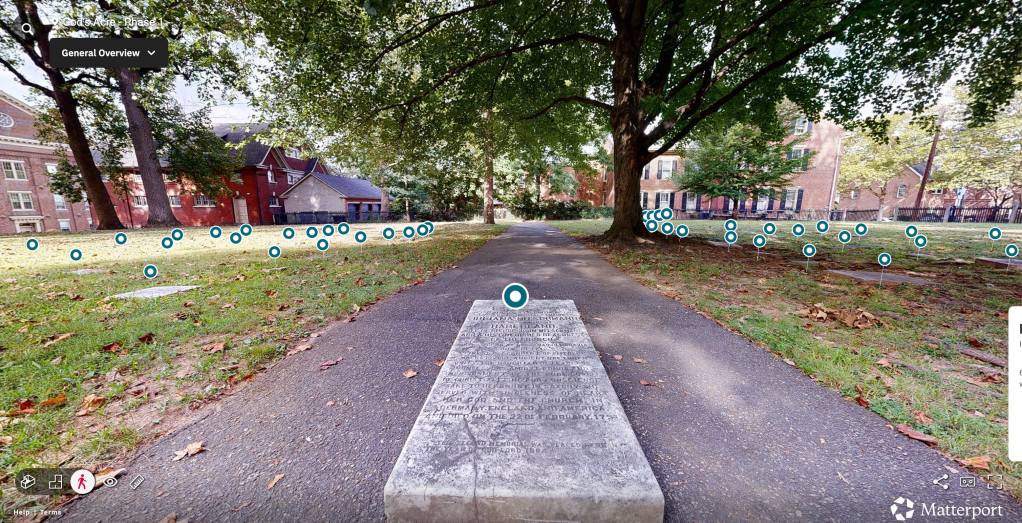
In conjunction with Cory Dieterly, Archivist of Reeves Library at Moravian College, a team of staff and students is developing a virtual map of the site ). Here, visitors can locate the gravemarkers easily and read more about the life stories of those buried there.
References

Map of Gottesacker DP f no 024 4

Baptismal Register of โ€œIndiansโ€ Catalog of Baptized Indians 1742-1764.xlsx
Network diagram of database 

Sacred Confluence: Place, Religion, and Cultural Exchange at the Moravian Mission of Shamokin, 1742-1755

Katherine Faull, Moravian University

American Association of Church History Annual Meeting, Chicago 2026

This week, members of the leadership team of the Institute for Moravian History and World Heritage presented a panel on “Moravians and Place” at the annual meeting of the American Association of Church History in Chicago. The panel was organized by Josh Follweiler, current PhD candidate at Princeton University and most recently Associate Pastor at Central Moravian Church, Bethlehem. Panelists were myself, Paul Peucker and Josh, and the chair and respondent was Craig Atwood. The papers provided a fascinating examination of how Moravians in the 18th and 19th century thought about place, whether as town planners, missionaries, or ministers. The specific places that were examined were Herrnhaag in the Wetterau, near Frankfurt in Germany; the early mission place of Shamokin, at the forks of the Susquehanna; and planned Moravian town congregations in Pennsylvania.

In my presentation, I focussed on the recently published Shamokin Diaries, analyzing the language of the text to build visual models of relationships between people, place and emotion. These visualizations allow us to explore the change in sentiment related to specific places (the river and the smithy) and people over the period the Moravian missionaries were working at the confluence. I reproduce these visualizations and the talk here.

The River as Metaphor and Realityย 

In 1747, as the Moravian missionary Johannes Hagen was returning up the Susquehanna from a trip to the grist mill at Quittapahilla, he described the river as “no different to look at than a town full of houses, the rocks lie in the water and the water flows criss-cross between them [like a warp and weft]”.ย  Five years earlier, Count Nikolaus von Zinzendorf on his way to the forks of the Susquehanna at Shamokin, Pennsylvania had also described the river in lyrical terms, the “water [was] beautifully transparent, and were it not for smooth rocks in its bed, it would be easily fordable. In crossing, we had therefore to pull up our horses and keep a tight rein.” I begin this investigation of the notion of a sacred confluence with these two quotations from Moravians to set the scene, literally and figuratively, for trying to understand how this group, which in the 18th century was spread across the globe from Greenland to the Caribbean, and from Kazan in Central Asia to Pennsylvania, understood the power of place. For them, did landscapes play a role in the choice of mission in a way that was not only defined by utility and strategic advantage? Did landscapes themselves hold sacred value? And if so, how did this concept differentiate itself from indigenous concepts of sacred landscapes?

Methodology

The River as Metaphor and Reality 

In order to address these questions, I have turned to the language of the Shamokin diary. As a philologist, I work with words. As a digital humanist, I use that language as data to recognize patterns and visualize them. As a translator, I know well that translation is โ€˜the most intimate act of reading’ (Gayatri Spivak).  So, with these tools, while transcribing and translating the Moravian mission diaries from Shamokin, Pennsylvania, I was struck by how the mission diarists described the landscape around the confluence (river, islands, bluffs, riffles, riparian buffers) as central to understanding their role. The physical geography of Shamokin constituted a confluence that required constant negotiation, with the forces of nature made manifest in floods and snowstorms, late frosts that destroyed newly planted crops, storms, and even an earthquake. This place shaped a unique mission encounter in which Moravians operated under the Indigenous authority of the Haudenosaunee. This adaptive mission strategy, centred on work rather than worship as primary witness, contrasts sharply with later Moravian missions on the North Branch of the Susquehanna (1765-1772), where mission places were built as intentional communities of worship and work and reveals how place determined religious praxis in colonial contact zones.

This paper explores the relationship between emotion, agency, and topography that emerged at Shamokin through the Moravian mission presence from 1742 to 1755, in the critical years preceding the French and Indian War. Drawing on the recently translated and published mission diaries (Faull, 2024), I examine how Shamokin differed from other Moravian settlements in colonial America. Unlike Bethlehem or Gnadenhรผtten, which were established as intentional communities, Shamokin existed as what Count Zinzendorf recognized as a spiritually strategic location where Moravians operated under explicitly negotiated Indigenous constraints (Merritt, 2003; Pointer, 2020).

The Moravian presence at Shamokin represented a central part of Zinzendorf’s mission plan for North America, which emphasized strategically practised humility and cultural respect (Atwood, 2004). I will show how this humility and respect was manifested in the mission through the lens of indigenous agency. The physical place directly influenced religious practice, with European hymns sung alongside sweat lodge ceremonies, pastoral visits conducted across the frequently swirling, ice-filled river, and Shikellamy, the Oneida sachem with oversight over Shamokin, finding spiritual and physical refuge in the Moravian loghouse while maintaining Indigenous practices. Through the 1747 formal agreements establishing a blacksmith’s shop, the Moravians created a shared sacred space where work itself became a form of witness.

Building on the work of Jane Merritt, Richard Pointer and Rachel Wheeler that challenge the older historiographical view of Shamokin, where Shamokin was described as a โ€œplace of the prince of darknessโ€, the Moravian mission diarists describe a place of challenge, both physical and spiritual, but also of cultural and spiritual exchange. Similarly, Rachel Wheeler describes Mohican Christianity in New England, which she argues represented an intentional spiritual choice that transformed both Native and non-Native spirituality, claiming that the Moravians succeeded where Congregationalists failed partly because they were “culturally non-aggressive” colonial outsiders who lacked expansionist ambitions. This approach enabled genuine mutual learning and spiritual exchange between missionaries and Native peoples. In his recent study of Moravian theology on the margins, Ben Pietrenka claims that these liminal spaces radically upturned hierarchies of power. Indeed, such ruptures have been described by Katherine Gerbner in her new book โ€œArchival Irruptionsโ€ as subversive discourses of power that are documented in the archives and require a radical counterreading of the traditional narratives of mission, race, and colonialization. It is against this backdrop that I investigate today the relations of agency and religion in the marginal place of Shamokin,  Pa. 

The town of Shamokin had long functioned as a crucial hub in a vast network of Indigenous mobility. The Moravian mission diaries of the 1740s and 50s reveal a constant movement of Indigenous peoples up and down the Susquehanna River: Tuscaroras, Cayugas, Oneidas, Mohawks, Nanticokes, and Lenape peoples are constantly arriving, departing, hunting, and passing through. Thus, Shamokin was not a static settlement but a dynamic crossroads where multiple Native nations intersected with European traders, missionaries, and colonial officials.

The Moravians’ attitude towards Shamokin evolved through contradictory emotions that traced the broader tragedy of Indigenous dispossession in the Susquehanna Valley. Initially, Zinzendorf well understood the importance of the forks of the Susquehanna as a strategic touchpoint with the powerful Haudensaunee Confederacy and its spiritual possibilityโ€”a place where their message of salvation could be spread, where communion could be celebrated, where the gospel might take root among multiple Native nations gathered together. Yet this hope coexisted with frustration over a place that never quite became what they envisioned, where missionary efforts yielded limited lasting results, and safety couldn’t be guaranteed. 

Shamokin served practical (if ethically challenging) purposes: a place to develop a relationship of trust with the Haudenosaunee, through building a blacksmithโ€™s shop for gun repairs for Indigenous peoples. The diary is replete with references to a working landscape where Indigenous economies intersected with colonial trade networks, though increasingly on terms dictated by land sales and territorial encroachment. Whereas previous European visitors, such as John Bartram on his visit in 1743, described the place of Shamokin as ideal land for settlement, with its “peach trees, plums, excellent grapes,” and also described the Indigenous people of the area as unable to cultivate it for themselves, the Moravians saw the Indigenous population as politically sophisticated, technologically capable, and spiritually discerning, understanding and respecting their reasons for not cultivating the land according to colonial rules as being rooted in resistance to colonization.

Interactive Visualization at this link

The mission diaries reveal the dark reality of such colonial encroachment, evidenced primarily through the chaos of violence and disorder fuelled by alcohol. The diarists record regular drinking & carousing” (9/17/1745), “all night dancing & howling” (11/2/1745) where “Everybody [is] drunk” (6/5/1748, 6/9/1748) with “drunken brawls & fighting” (2/24/1749) causing “Sleepless night for missionaries” (1/11/1749) and culminating in the Penns Creek “Massacre of white neighbors” (10/16/1755) by the Western Delaware who were allied with the French. 

The Moravian missionaries at Shamokin thus lived a paradox of witness and persistence amid overwhelming chaos. Between 1747 and 1755, they engaged in relentless physical laborโ€”constructing two mission houses, laying floors, building chimneys, repairing bridges, and erecting a smithy that became central to their relationship with the Indigenous community. Their documentation of measurements, dates, and improvements suggests both immense commitment to their work and an attempt to create order in an environment beyond their control.

The forge operated as more than a blacksmith shopโ€”it was a tool of engagement and a testament to pragmatic adaptation. The missionaries fixed guns, made charcoal, accepted payment in hides and pelts, and deliberately kept cultivation “at the level of the Indigenous economy” rather than imposing European agricultural models. Yet their economy remained perpetually precarious: starvation diets, crops ruined by frost and hail, with chickens and horses stolen or lost.

Yet amid this distress, the Moravians maintained remarkably disciplined spiritual practice. They held communion services, foot-washing ceremonies, and, in the 1750s, lovefeasts requiring sugar and tea, Easter dawn services at the turnip field where Brother Hagen had been buried, and services that ran until 2 a.m. The stark contrast is captured in Christmas observed with lovefeast while chaos reigned outside. Their principled Sabbath observanceโ€”refusing to let Indians demand that they work at the forge on those daysโ€”led to “astonishing questions” even as it was criticized for interfering with economic needs. One poignant detail reveals both their vulnerability and their peaceful intervention: a brawl “silenced by missionary’s singing.”

By 1755, the mission’s fragile stability collapsed. Advised to flee (advice “disregarded”), threatened with land claims, facing “bloody action by hostile Indians,” they finally witnessed the “massacre of white neighbors” in October. The mission house and forge were offered for sale with no date givenโ€”a poignant detail suggesting the uncertainty of when they could actually leave.

The archival evidence clearly shows that the Moravians at Shamokin operated within Indigenous political and cultural frameworks, adapting themselves to Native authority, while simultaneously navigating colonial politics. When Shikellamy held a Nanticoke Council in 1747 to address the issue of two Nanticokes who had been shot with arrows, the Moravians participated by preparing food “which they placed before the council”โ€”thus serving the Indigenous political process rather than directing it. Significantly, when the Nanticokes showed reluctance to listen to Shikellamy, the Moravians attributed this to “not to some essential notion of their race but rather to them being surrounded by traders,” placing blame on colonial disruption rather than on any inferred Indigenous characteristic.

Cultural exchange flowed in multiple directions. In 1757, Moravian visitors to a Shawnee village on the North Branch were invited to a sweat lodge and accepted, afterwards enjoying an evening concert of European chorales and music for strings played on violins provided by the Indiansโ€”a remarkable scene of reciprocal hospitality and shared musicality. Medical practices also bridged cultures: on July 10, 1747, several Indians came to Brother Hagen to be bled, reflecting a shared humoral worldview where both Moravian and Indigenous medicine understood the body as a system of flows requiring balance.

Yet the missionaries also practised strategic isolation, maintaining strict “aloofness from traders” who were “strictly kept out of the house.” This wasn’t cultural superiority but a survival strategy in an environment where traders brought the twin scourges of alcohol and violence. The Moravians navigated a careful path: adapting to Indigenous authority and participating in Native cultural life while protecting their mission space from the destabilizing forces of the colonial economy. Their approach recognized that the greatest threats to peaceful coexistence came not from Indigenous peoples but from European traders whose liquor traffic undermined the very communities the Moravians sought to serve.

Interactive visualization is at this link

The smithy at Shamokin was clearly the economic and relational heart of the mission. The Moravians structured its operation to align with Indigenous economic patterns rather than imposing European models. Indians were “kept on the preferred list,” receiving priority service, while payment came in hides and pelts through immediate exchange, avoiding the debt relationships that characterised exploitative trader practices. The forge offered practical services: repairing guns, manufacturing charcoal, and meeting community needs on a self-supporting basis. This economic philosophy extended to their agricultural practices: they explicitly kept “farming activities on the level of Indian economy” and maintained “agricultural enterprises at a minimum.” Rather than establishing a European-style plantation that would signal territorial claims and economic dominance, the Moravians adapted to Indigenous economic patterns, using the smithy as a tool of engagement that served the community without attempting to transform it. 

On August 2, 1747, letters from Bethlehem arrived (always a source of joy), but this time with the critical news that agreement had been reached with the Colonial government to build the smithy. Shikellamy calls a council of the Indigenous leaders, which permits Bishop Spangenberg to speak through his letters, composed in Onondaga and signed with his Haudenosaunee name, Tโ€™girhitonti. That same evening, the Moravians celebrated their first communion, thus demonstrating that work and sacred life were intertwined. Hagen writes in the diary, “How we felt at this communion with our Lord I cannot describe. It was also important to us because it is the first one here in the wilderness, perhaps as long as the forest has stood.” 

But the smithy was much more than a place of work- it was central to the Moraviansโ€™ mission at Shamokin, constructed and operated by them. In this interior space, they controlled who could enter and when, and who could have work done and when. According to the agreement with Shikellamy, it was Indigenous agency that decided whether the warriors needed to pay for the work. The space of the smithy, also, demanded a moral position in which the Moravians could not avoid complicity in the repair of arms. Every decision they made demanded a moral choice and left them no space for passivity in the face of conflict. 

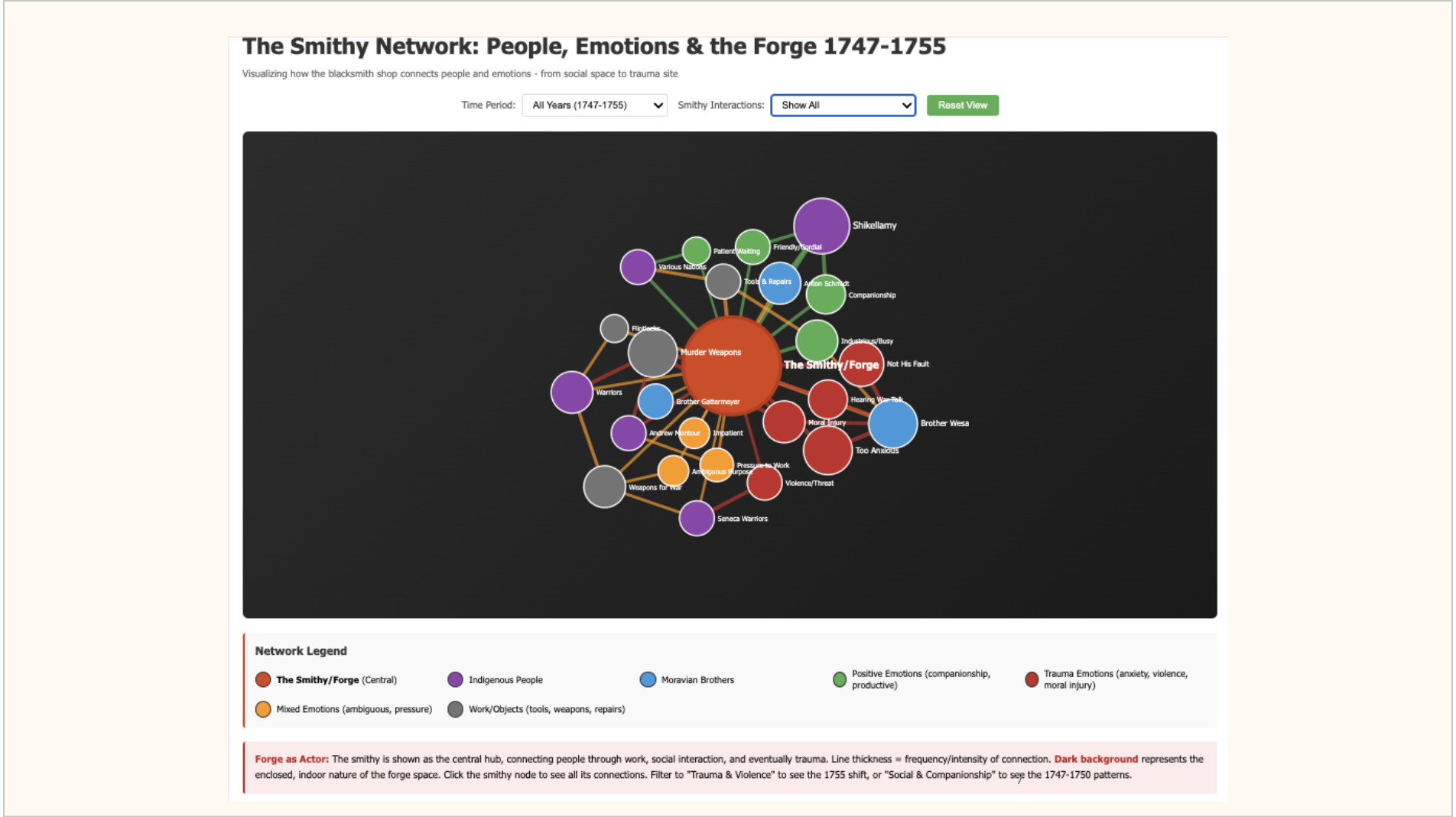
Looking at the smithy as a fulcrum of emotion and agency, we can view this diagram which us designed to show emotions connected to the smithy over time. For example, if one wants to talk of an emotional register, the smithy in 1755 is a place of impossible choices for Brother Wesa. A place that had once been a space of Shikellamyโ€™s companionship (1747-8) had become a site of trauma (1755) where Wesa is forced to repair the bloodstained weapons of war.

Interactive visualization is at this link

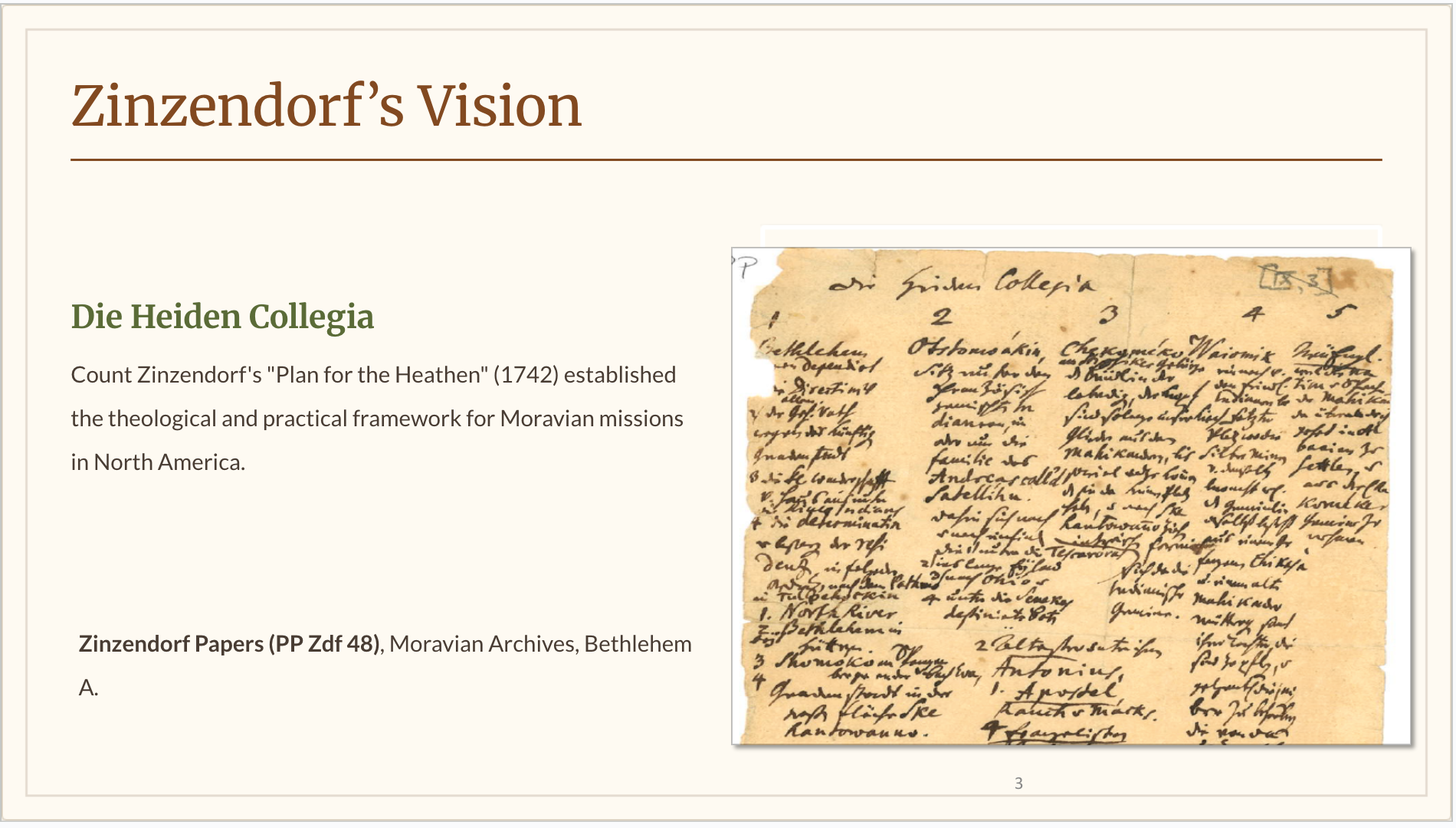
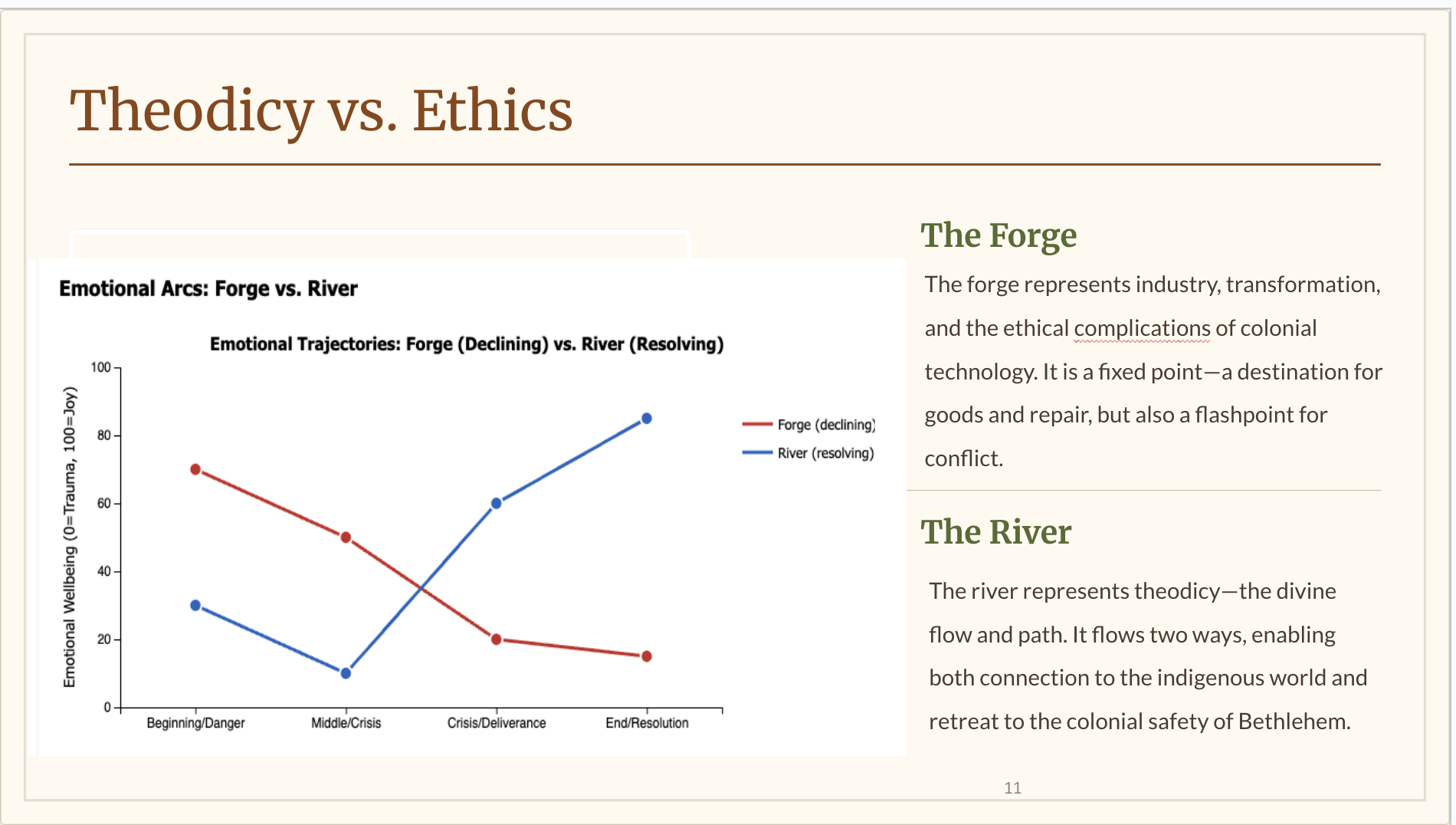
If we perform the same analysis for the Susquehanna River, we can see that the river serves as an antidote to the ethical conflict in the smithy. It belongs to the realm of nature, an open force of nature beyond human control in a pre-existing landscape. It acts independently of human will, flooding, freezing, and flowing. Moravians respond to it but do not control it. It also offers a morally neutral territory, carrying warriors up and downstream. It offers danger through its rocks, riffles, and ice floes. Yet it is also deeply embedded in colonial geography, defining the boundaries of lawful settlement. The river has a social function, too, linking Shamokin with the Wyoming Valley (one of Zinzendorfโ€™s original Heiden Collegia).

Interactive visualization at this link

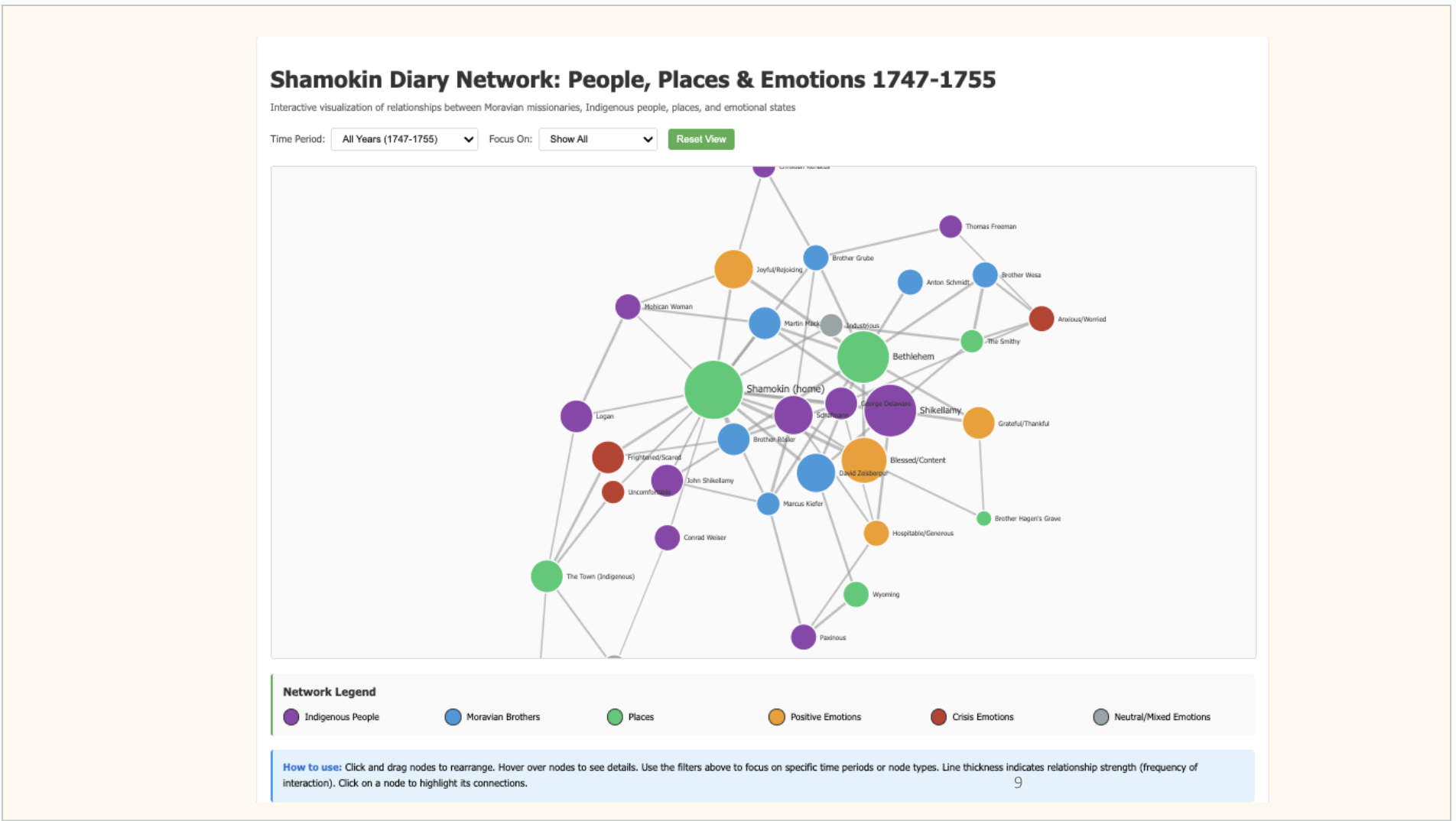
But not only are places linked to emotion; so are people. First, references to specific places are accompanied by specific sentiments in the diary narrative (of course, there are multiple diarists, and their reactions to people and places also determine the emotional index).

Interestingly, Bethlehem is always seen as a place of refuge, frequently referred to during this period by those on mission work as โ€œdas Kripplein,โ€ the little manger. People are also associated with emotions: Shikellamy is always a friend and protector, and when he dies, his sons, Johan and Logan, inherit his role but are not as intimately involved in the work of the smithy.

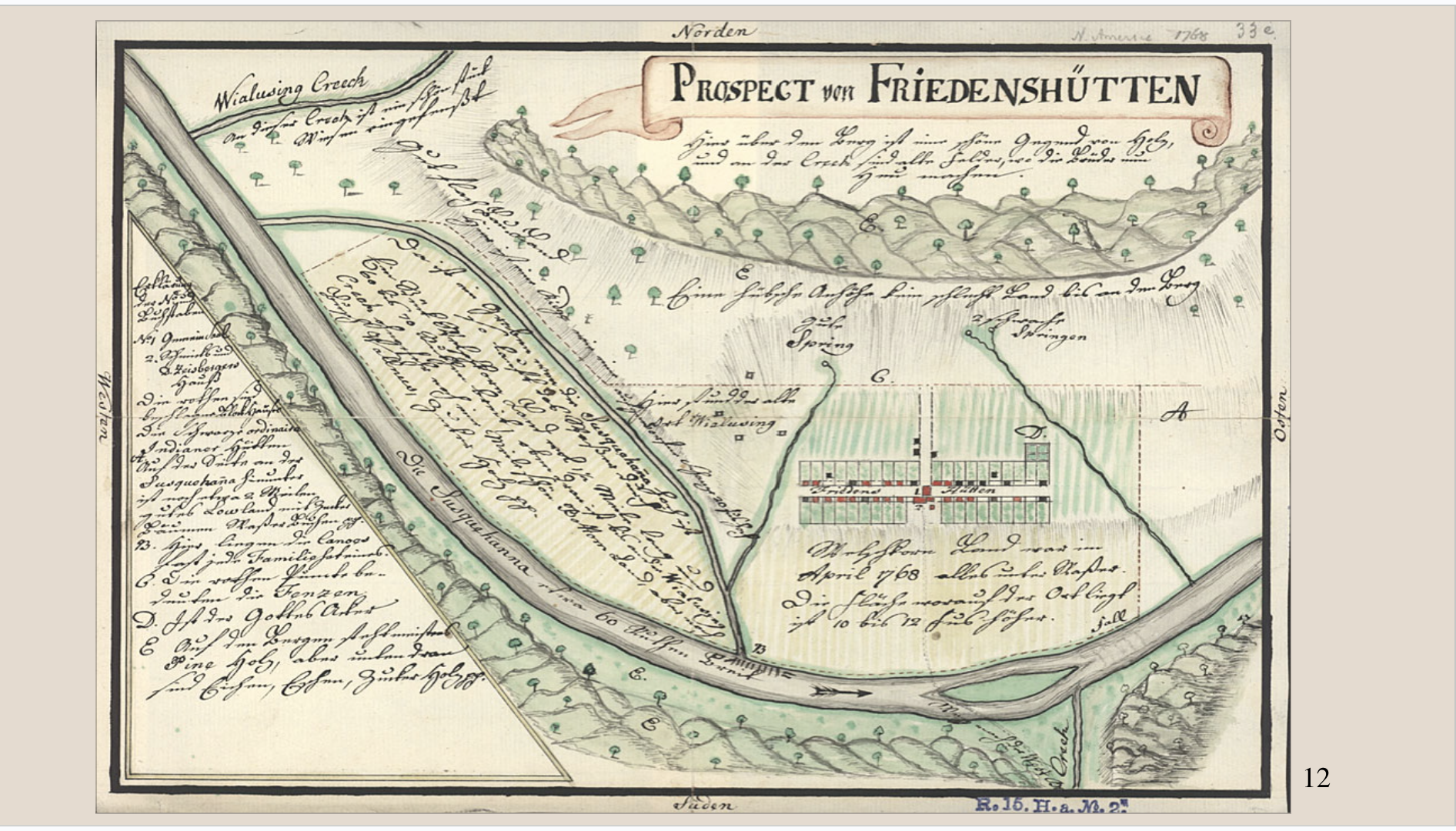
The sense of sacred place at Shamokin contrasts sharply with that of the Moravian North Branch mission sitesโ€”particularly Friedenshรผtten (“Huts of Peace”) (1768-1772) and Scheschquehannunk (1769-1772)โ€”both established between Pontiac’s Rebellion and the American Revolution. These later “Places of Peace” were intentional Christian communities led by converts such as Johannes Papunhank (a Munsee religious leader baptised by David Zeisberger). Friedenshรผtten embodied the Moravian mission vision that had eluded Shamokin: a thriving mission town with substantial infrastructure, agricultural prosperity, and a vibrant liturgical life that earned admiration from colonial officials and Indigenous leaders alike. The community erected impressive buildings, including a meeting house with glass windows and a belfry, produced abundant harvests that fed both residents and countless visitors, and grew from fourteen to forty-seven communion participants. Their sophisticated governance structures, bilingual education, and extraordinary hospitalityโ€”extended even when it strained their own resourcesโ€”demonstrated Indigenous Christian agency and strategic cultural competence. Yet this success contained its own vulnerability. Built on disputed land, caught between competing political pressures, and ultimately forced to abandon everything on May 3, 1772, Friedenshรผtten revealed the brutal reality that no amount of prosperity, spiritual commitment, or colonial admiration could protect Indigenous peoples from the violence of expansion and the fundamental insecurity of their land rights. Where Shamokin had struggled against chaos, Friedenshรผtten achieved everything the Moravians envisionedโ€”and still could not survive.

To return to the questions with which I began this presentation: did landscape play a role in the choice of mission in a way that was not only defined by utility and strategic advantage? Did landscapes themselves hold sacred value? And if so, how did this concept differentiate itself from indigenous concepts of sacred landscapes? I would argue that landscape of Shamokin was selected strategically but became sacred though the 8 years of the mission being active there. Shamokin was selected strategically: Shikellamy’s invitation, Six Nations council site, smithy opportunity. But eight years of dwelling transformed it.  The missionaries noticed the river’s beauty (“like warp and weft”), tended Brother Hagen’s grave with pre-dawn visits, called their new house “this dear little place” and composed a hymn for it. They left “not without little tear.” Thus landscape accumulated sacredness through relationship, not geography.

BETHLEHEM was a permanent sacred, always positive across all periods. Letters from there “like honey and balsam.” The place they couldn’t stop longing for.

THE RIVER: Theodicy sacred. Sacred when God acted through it – the flood became Noah’s ark, dangerous falls became deliverance sites. Natural danger without moral culpability.

SHAMOKIN: Relational sacred. Sacred through Shikellamy’s daily protection, through communion’s “unspeakable proximity.” But this sacredness evaporated when relationships fractured in 1755.

The emotional geography reveals that the sacred for the Moravians wasn’t fixed in land but in relationships and divine action. How did this understanding differ from Indigenous sacred landscapes? The Shamokin diary shows that both groups navigated the tension between place and the need to be mobile. Therefore, the relationship to place was not simply “fixed” or “portable”. For the Moravians, Christ is portable (they can worship anywhere). However, through the text we can see that their emotions showed a strong longing for Bethlehem, and when crisis arose, it forced a flight to their permanent sacred centre.

For the INDIGENOUS PEOPLES, place was vital to rituals of identity. For example, the Nanticoke reburied their departedโ€™s bones, the islands in the river were places for council fires and decision making, the land and forest and water were places for the hunt and trade. At the same time the indigenous people demonstrate strategic mobility (seasonal migration, dispersal under pressure) and also, most importantly, exercised agency over who could stay, who had to leave Shamokin. The critical difference was that Moravians could leave because Bethlehem remained secure. Indigenous people maintained protocols through displacement because colonial violence destroyed their sacred places.

The Moravians sought a “portable sacred” – Christ present anywhere. But the emotional geography of the Shamokin diary reveals they couldn’t escape place through theology, in that they couldn’t worship safely without Indigenous protection (Shikellamy made devotion possible); they couldn’t resolve moral complicity in one place (the forge), so they fled to another (the river) where suffering could be explained theologically. And finally, they couldn’t stop longing for one specific place (Bethlehem).

Meanwhile, Indigenous people maintained sacred obligations to specific places (returning bones, ritual sites) while strategically adapting to colonial violence – demonstrating not attachment vs. mobility, but agency under impossible circumstances. Colonial violence, not theology or culture, determined who kept their sacred places. The Moravians fled to Bethlehem. Indigenous people were displaced from Shamokin. Both groups’ relationship to landscape was relational, adaptive, and vulnerable – but only one group had a secure sacred center to return to.

Therefore, landscape mattered beyond utility, but it became sacred through dwelling, not through inherent geography. Landscapes held sacred value for the Moravians – but through relationships, divine action, and community, not fixed spiritual power. This differed from Indigenous concepts – but both groups navigated place/mobility more than simple binaries suggest. The emotional geography reveals that vulnerability, not belief, shaped the sacred landscape. And, at least for a while, Indigenous agency determined who could stay.

Race, Gender and Feelings: Moravian Religious Sentiments in 18th century North American Memoirs

Paper given in November 2021 to mark Professor Wolfgang Breul’s Birthday. A small portion of the results discussed here are published in the Fall 2022 issue of the Journal of Moravian History.

Thank you for invitation to present a paper on the subject of โ€œFromme Gefรผhleโ€ to celebrate Professor Wolfgang Breulโ€™s significant birthday (albeit a year late!) As we share a birth year, I am well aware of the passing of this milestone myself, but am fortunate enough to be about six months older and therefore marked its passing in the company of friends with good food and wine before Covid forced us all into lockdown!

We are here to show our indebtedness to Professor Wolfgang Breul for his lifelong research into aspects of Pietism that were not the norm when he began his academic career. Like him, I am intrigued by the questions of how Pietism, as a religion of the heart both challenged Enlightenment concepts of what it means to be human, whether in terms of reason, writing, and scientific enquiry, and also extended the possibilities of human fulfilment to those denied by the philosophers of reason. Those considered not to be fully human because of their sex and race by thinkers such as Kant and Hume, and who were excluded from arenas of political, educational, cultural and economic agency through the hue of skin, hair type, breadth of forehead, or the possession of a uterus, enjoyed perhaps the liberatory potential of Pietismโ€™s promise of universal salvation through a personal relationship with Christ.

I have devoted much of my professional life to the study of autobiography, gender and race and in particular the genre of the Moravian memoir (Lebenslauf) with its promise to deliver an authentic record of an individual’s life. The custom, introduced by Zinzendorf in the 1750s as a means to bid farewell to the Gemeine, was widely practised throughout the Moravian world and also in the North  American congregations of the 18th century. 

What I would like to briefly discuss today is whether an examination of specific corpora of memoirs undermines or confirms the notion of โ€œemotional communitiesโ€ in the ethnic and cultural groups that made up Colonial and early American congregations. Drawing on a North American corpus, written in German and English by Moravians of European, African, and Native American descent can we detect common emotional responses to recorded life experiences?  In what ways do these North American documents reveal fundamental differences in the execution of the promise of the Moravian memoir when we include historically disenfranchised and minoritised populations? In this preliminary examination, I will be using both analogue and computational methods of reading and analysis of archival documents from the digitized and manuscript collections of the Moravian Archives in both Europe and North America (moravian.bucknell.edu).

Although an enormous corpus (over 65,000) of memoirs exists and is housed primarily in archives in Herrnhut, Germany and Bethlehem, Pennsylvania in the US, but also in smaller less researched collections of documents in many of the Moravian settlements across the world, less than 10% of the material composed between 1750-1850 has been published.  

Over the last 25 years, scholarly interest in the genre of the Moravian โ€œLebenslaufโ€ has been fueled by first the recognition of autobiography as a genre worthy of scrutiny and second by easier physical access to the main repository of the manuscript sources in the Unity Archives in Herrnhut, Germany. Concurrent with this have been changes in conceptual models in social and religious history, and gender/race theory that see such โ€œego-documentsโ€ as valuable primary sources to gain a perspective from the social classes that do not usually have a voice in the writing of history, such as women and men of the artisan classes and marginalized peoples who were enslaved or driven from their lands by settler colonists. One constant focus of the critical gaze has been the question of the degree of expressive and emotional freedom allowed each individual to record authentic and unique reflections on lived experience within the memoir.  Whereas some critics have argued that the very institutional edict to write a self-narration necessarily limits that act in terms of form, formulation, and individuality, others have argued that the Pietistic environment in which these self-relations were created, encouraged, at least in the 18th century, a balance between the demands of the community and the self.  As Peter Vogt has so aptly stated, the Moravian memoir constitutes โ€œa dynamic of reciprocity between individual witness and community identity.โ€ Paul Eakin also discusses such reciprocity in the narration of the self and argues that without a story there is no self, and, in the age of the digital, this self is โ€œnot only reported but performed, certainly by any of us as we tell or write stories of our lives, and perhaps to a surprising degree by the rest of us as we listen to them or read them.โ€ (Eakin 2014, 24)

So how does this dialectic between the demands of the individual and the community play itself out in the North American memoir in light of promises of liberty in both the US Declaration of Independence and formalized in the motto adopted by the US Moravian Church, ‘In essentials, unity; in non-essentials, liberty; and in all things, love’? The origin of the motto is thought to have come from the 16th-century thinker, Peter Meiderlin, who apparently adopted it from an earlier Catholic bishop, Marc Antonio de Dominis (1560-1624) himself embroiled in the vibrant disputes of the Reformation and Counter-Reformation. It is thus a motto that is not exclusive to the Moravian Church but is rather entwined in the confessional and denominational conflicts of the 16th and 17th centuries, and, according to Craig Atwood, it is a motto also used by other religious groups, such as the Quakers and Evangelical Presbyterians. It is clearly then not a motto that the 18th-century Moravians would have known, either in North America or in Europe. Considered an attempt to transcend sectarian differences, this dictum was first cited in a Moravian context by Augustus Schulze, a professor at Moravian Theological Seminary in 1902 and was then quickly adopted by the American Moravians, with its obvious echoes of the language and intent of foundational documents of the United States. Despite this external origin, the motto serves as a useful summary of the ethics of the Moravian Church in America: e pluribus unum.

Mottos serve as an externally and internally directed signifier. To outsiders of a group, they signal important beliefs held by the insiders, To the insiders, they act as a reminder of the way in which they live, acting as a kind of shorthand to identity, a glue. Scholars of Moravian history, when analyzing the identity and modes of cohesion of the Moravian Church, draw heavily on Benedict Andersonโ€™s crucial work, โ€œImagined Communitiesโ€ (1983). For example, in her foundational study of the โ€œHerrnhuter Brรผdergemeineโ€ as a global community, Gisela Mettele (2009) employs Andersonโ€™s concept of the necessity of โ€œsimultaneityโ€ and โ€œcommunicationโ€ (highly appropriate for todayโ€™s Zoom environment) coupled with the importance of language (German) to construct an intellectually satisfying picture of the Moravian Church as an entity that could thrive in the realization of its motto โ€œIn essentials unity, in non-essentials, liberty and in all things loveโ€. Similarly, Peter Vogt, in his essay, โ€œEverywhere at homeโ€ (2006) outlines the pillars on which the transatlantic Moravian Church founded its work.  For Vogt, these consist in 1) strong leadership, 2) an effective network of communication, and 3) a uniform system of belief and worship. Vogtโ€™s essay outlines clearly those aspects that he considers most important for such unity in belief and worship.

If we think of a unifying force within the Moravian Church, let us take as an example, the terminology of Moravian identity. How many of us Moravian scholars have had to include a glossary of terms in any monograph on or edition of Moravian materials? What to Moravians and non-Moravians who have immersed themselves in this history may not need explanation is quite baffling to outsiders. What is a Lovefeast? A Choir? A Singstunde? A Pedilavium? A Sickwaiter? This specialized terminology which exists in German, English, and many of the other languages of the people of the Church, provides, as Vogt argues, โ€œthe connectedness between the members of the community in terms of fraternal kinship tiesโ€ (Vogt 2006, 18): a kinship based not on blood ties but on a shared vocabulary of faith. Vogt argues that the very concept of the โ€œGemeineโ€ โ€œimplies the awareness and the concrete experience of being connected to fellow believersโ€ (19).

The organization of the Moravian Church was first held together (argues Vogt) by the charismatic personality of its founder, Count Zinzendorf and after his death the Unity Elders Conference saw the organization of the Gemeine as providing a strong and universally recognizable structure within which members could continue to feel connected globally. This โ€œhomogeneityโ€, Vogt continues, was also present in the unity of worship and faith. The Singstunde in Salem is the same as the Singstunde in Herrnhut, or Neu Herrnhut in Greenland or Australia, or the Singing Hour in Fulneck, Yorkshire. Coupled with this uniformity of ritual structure is the fact of its communication to all other places in the Moravian world through the Gemeinnachrichten or its successor publications. Extracts from mission reports, memoirs deemed of universal interest, diaries, letters were sent out to the Moravian congregations around the globe. These same reports were read out loud to the congregations, if not completely simultaneously to the hour, but on the same Sunday at the monthly Gemeintag (Vogt 24: Mettele, 145-7). In this way, Onondago and Lenape peoples in Central Pennsylvania could hear about the mission to the Inuit in Greenland; a young Friedrich Schleiermacher in Barby could learn about Heckewelderโ€™s travels through Ohio and up to Detroit; and Anna Anders in Bethlehem could hear about the life of the child, Peter West, born in London in 1751 and who was buried in Fulneck in 1760, in the Gottesacker where Anna herself would be buried in 1803. This unifying ritualistic action of writing, reading, and listening to the lives and actions of others provides, according to Vogt and Mettele, the stability and unifying strength of the expanding Moravian Church across the globe.

But what about that other tenet of the North American Moravian motto, โ€œin non-essentials, libertyโ€? What are such non-essentials, and how did liberty manifest itself in the lives of the Moravians? To return to the 18th century: in the light of the origins of this motto, it is clear that the notions of โ€œessentialsโ€ as outlined by Peter Vogt and Gisela Mettele can be agreed upon. But, in an era prior to the political revolutions of the late 18th century, we must remember that โ€œlibertyโ€ or โ€œlibertasโ€/Freiheit occurred in more of a confessional realm than political. So how might this motto apply to the memoirs from this early period? Critics, such as Gisela Mettele, Stepahnie BรถรŸ, Christine Lost (and myself) have argued for the importance of the Moravian memoir as a social and theological practice within the church. Mettleโ€™s examination of the memoirs that were circulated in the Gemeinnachrichten and later published in the Nachrichten aus der Brรผdergemeine argues for the importance of the uniformity of the published lives to show โ€œsimultus iustus et peccatorโ€, the publicly communicated salvific history of the individual as sinner and redeemed. Thus, the individual differences in terms of details of where s/he was born, into which social class s/he was born, which language s/he spoke could all be considered insignificant in comparison with the essential consciousness of oneโ€™s need for salvation. This last point is especially bewildering to those of us in the 21st century when we read autobiographical documents by enslaved peoples or those whose lands were occupied by settler colonists. The commonality with white Moravians consists in the โ€œslavery to sinโ€ and not in the question of being enslaved or dispossessed and colonized. Within the language and symbology of the Moravian church, there might be a place where some form of liberty has been exercised. I would agree with Peter Vogt about the role of ritual in cementing the far-flung communities together. However, as we have seen from recent work by Rachel Wheeler and Sarah Eylerly, Moravian hymns still are expressions of faith whether they are sung in Mohican, Delaware, German or English.  But when it comes to the composition of a memoir, there is inherent within that very act the tension between the individual life and the universal pattern of salvation.

The worldwide reach of the Moravian church means that Moravian archives preserve some of the earliest โ€˜ego documentsโ€™ produced by eighteenth-century Africans and Native Americans. And archiving these documents has fulfilled a twofold purpose; that is storing and ordering them in the institutional archival memory of the Church and also, for those who access this archival memory, as a locus of presence and interactivity in the lived memory of the Church. (Haskin 2007, 401) As noted above, the relation of the lives of exemplary believers, as Peter Vogt argues, helped to create โ€œa tangible impression of the invisible church community.โ€ (Vogt 2017, 39) In an examination of several centuriesโ€™ worth of Lebenslรคufe from the Herrnhut archives, Christine Lost describes the communicative structure of Moravian experience. (Lost 2007; Mettele 2009) as both inwardly and outwardly directed; that is, it serves as a means of self-examination for the writing โ€œIโ€, as well as participating in the construction of a communal identity. This dialectic of individual/community (that so influenced Friedrich Schleiermacherโ€™s concept of religious consciousness and ethical action) reflects very much Zinzendorfโ€™s own understanding of the function of the Lebenslauf. The relation of oneโ€™s life within this community serves as an act of witness and testimony to the invisible host of those who had gone before and who were still to come.  Additionally, the intersection of religion, cultural and personal memory, (Jan Assmann 2008) introduces a narrative tension into the writing oneโ€™s memoir, as the author balances demands of a personal desire to belong to a social group with the lived realities of one life. 

And maybe we also need to ask, to what extent can there be liberty, what might it look like, and what role does this balancing act play in creating the โ€œuniversal historyโ€™ of the church, as Zinzendorf envisioned it. What happens when the authors of those self-relations belong to otherwise disenfranchised groups within the 18th century; groups such as the enslaved peoples of Africa, the freed and formerly enslaved, the Christianized indigenous peoples from the Moravian mission movement, and women? In what way can the Moravian memoir act as an โ€œauthentic relation of the selfโ€ and not instead represent the acquisition of a new argot that signals membership in a new group?

The development of tools in the field of digital humanities affords researchers a way of not only approaching these questions but also of thinking in new ways about how to conceptualize notions of self, narrative, and language. Corpora of memoirs have already been constructed by researchers interested in demographics, religious community, missions, and memoirs in Moravian history (see, for example, Smaby 1988, Mettele 2009, BรถรŸ 2016, Lost 2007, van Gent 2012, and Faull 1997 and 2017). The development of digital tools in text analysis, such as Voyant and Antconc, permits the investigation of large corpora in search of topic models, keywords, lexical โ€œkeynessโ€ in comparison to non-Moravian corpora.  Looking for meaningful patterns in the exercise of distant reading transforms digital tools into integral parts of the process of understanding the study of Christianity.  Furthermore, extracting tagged entities from marked-up texts leads to the possibility of both network visualization and geospatial analysis, allowing such work to expand and ask new questions and find new answers. In many ways, re-enacting the archival drive of the Moravians in the 18th century, the methods of DH permit analyses of both the metadata and the text of large amounts of information that allows the other function of memoir to be fulfilled, the function of lived memory in which the archived materials of the past may become present and interact with others. (Haskin 401) 

The Moravian Lives project is aimed at realizing the potential of DH approaches to opening up the memoir corpus, namely through the construction of a searchable database of the memoir metadata of all the holdings in the main archives of the Moravian Church in Bethlehem, PA and Herrnhut, Germany, and also linking the metadata visualizations with the facsimile and transcribed memoirs and their extracted named entities. 

The Moravian Lives platform provides a means of accessing and analysing corpora with specific parameters of time period, geographical location, gender. As digitized memoirs in the Bethlehem archives have been linked to the search interface, we can access the memoirs of Native American and African American members of the Congregation, members such as Peter and Mary Titus. 

For example, if we search for Mary Titus in the map interface we find the record exists and is linked to the digitized original. The transcription has also been completed, and thus we have access to a digital text

Slide 15

Similarly, if we search for her husband, Peter Titus, we find his memoir on the transcription desk, and it has already been transcribed and also Andrewโ€™s memoir which I have published and discussed previously. 

Much work is to be done on the topic of what I have termed โ€œBlack Bethlehemโ€ but we have been able to digitize the memoirs I have been able to locate so far in a collection on the Moravian Lives transcription desk. Being able to make collections of memoirs allows us to create โ€œcorporaโ€ or bodies of text on which we can perform computational or algorithmic readings in an attempt to describe and analyse possible patterns of normative expressions. 

 As Jacqueline van Gent has argued in the context of Moravian ego-documents, the expression of emotion in textual sources (letters, memoirs etc) does not necessarily allow us to know what emotion a subject was feeling at the time of composition.  Rather, salient emotions reported in these sources adhere to the language rules and expectations of a linguistic (and emotional) community.  In the context of the memoirs of enslaved peoples (Andrew and Magdalene), converted non-European peoples can adopt the emotional vocabulary of the Moravians in order to display their membership in the group.  The question as to the authenticity of those emotions is a much harder one to answer. However,  as mentioned above, as one part of the unity of the Moravian motto, the โ€œnormsโ€ of Moravian language adhere to expectations for norms that are set through specific practices (praxes within the Moravian congregations).

Results for key terms from Bethlehem’s English language memoirs
Results from African-descended men’s memoirs in Bethlehem

Furthermore, if there are limits to the authenticity of expression, especially within marginalized groups, then can linguistic expression reveal something about our subconscious states? Given the limitations expressed above as to the use of conscious selection of vocabulary, psychologist James Pennebakerโ€™s methodology provides a multidimensional lens to analyse language that relies not on the โ€œcontent wordsโ€ of what we say but on the โ€œfunction wordsโ€ or stop words, often stripped out of a text when using distant reading techniques, such as Voyant or Antconc.  These function words–the articles, prepositions, pronouns, negations, auxiliary verbs, conjunctions, quantifiers, common adverbs–are those parts of speech that we use unconsciously; they are used at very high rates, they are short and hard to detect, they are processed in a different part of the brain than content words, and they are very social. So can this method overcome the problems I outlined above with other computational (and non-computational) methods in the analysis of Moravian memoirs?  Can we access subconscious psychological states through the application of Pennebakerโ€™s methods? Running the corpus through the LIWC software we find: (results here)

Looking at this corpus, Women in Bethlehem Archive (German): there is a significant difference between memoirs by White American women and Native American in terms of positive emotions (including terms such as love, sweet, nice). However, the NegEmo measure (anxiety, sadness, hostility) shows not much variance. Maybe the absence of positive emotion does not necessarily mean that there is a presence of negative emotion. Of the womenโ€™s memoirs from Bethlehem that are in English, we find much more variation in the Authenticity measure — Burger, Baker, Powell, Quitt all show distinctly higher values.  Of the men from the Bethlehem Archive who are writing in German, the lowest PosEmo scores in the corpus include Andrewโ€™s memoir.  However, one of the highest PosEmo scores belongs to Peter Titus.  Andrewโ€™s memoir scores among the highest for NegEmo. Of the men in Bethlehem who write in English there is hardly any variation in PosEmo or NegEmo scores. 

 Moving now to a small corpus of 12 memoirs by Native Americans, how do these subconscious โ€œscoresโ€ look? As we know, such texts are very hard to find in the archives. Often the biographical information is hidden behind Europeanized names or racialized monikers, and of this corpus 20 are written in the third person and two in the first person. However, even within the third-person memoirs, we find direct quotations from the speaking or interviewed subject. Running the texts through LIWC we find among the Native American authors that the highest score for โ€œangerโ€ and โ€œnegative emotionโ€ is found in โ€œMichaelโ€™s memoir (it can be found on the BDHP website). 

Michael (we do not have a record of his Native name) came from the Minnisink people and was baptized in Shekomeko by Brother Bรผttner. Described as a โ€œgreat warriorโ€ in his memoir, his bravery was depicted on his face in a series of tattoos: a snake, scalps on a pole, two crossed spears and a boar. The Choir Helper of the Single Brethren who records the memoir says โ€œall of it was done very neatly.โ€ Michael, according to the text, refuses to consider the proposed relocation of Christianized Native Americans to the Wyoming Valley. During the French and Indian war, he bolsters up the spirits of the Single Brethren (who were posted on the fences around the Bethlehem settlement) and urges them not to be afraid but rather says, “If you are in good stead with the Savior, you would not be so nervous.  Your bad hearts are responsible for your anxiety.” Michael is considered the โ€œcrown of all our baptized in this part of the world, because his holiness progressed after his baptism without many changes and transformations.โ€ So we need to ask ourselves where does the negative emotion and anger come from that reveals itself in the use of function words in Michaelโ€™s memoir? His resistance to being moved out of Bethlehem? His bravery? His choice to become Christianized? 

Or we might look at why the memoir of โ€œIsaac,โ€ a young Mahican/Wampanoag man who died at the age of 18 having been baptized at the age of 11 scores so low for โ€œauthenticity?โ€. His mother and father had both been baptized by the Moravians. By 14 he had lost both his mother and father to smallpox and fever and was taken in by friends who moved with him first to the Wyoming Valley and then to the Moravian mission of Gnadenhรผtten. He escaped to Bethlehem after the attack on the mission in November 1755 and was taken into the Single Brethrenโ€™s house where he died the following year of consumption. On his deathbed, the choir helper notes, โ€œAt his request a number of little hymn verses in Indian were sung to him by the Indians present.  Shortly before his departure Br. Schmick asked him if he felt Jesusโ€™ Blood in his heart and would gladly go home. To which he responded; โ€œQuame,โ€ that is, โ€œYes.โ€  After that he stretched himself out, laid his hands on his breast and went to sleep for a while.โ€  What I find so interesting in this description is the language in which the verses are sung and that his last words are recorded in Wampanoag.

Conclusion

If we return to the nature of the practice of unity and liberty within the Moravian Church of the 18th century, can we perhaps test those claims by examining the recorded lives of those who belong to non-European groups, especially women? I have tried to show in this brief talk first, the main ways in which scholars have tried to understand the creation of unity within the Moravian Church of the 18th century, through neologisms, specific linguistic tropes, ritual, and simultaneous communication. Then, I examined one of the main means to create unity, that is the writing of a memoir, that definitely follows a specific narrative and emotional pattern which is composed to be read to others. Beyond reading individual memoirs out of primarily genealogical interest or for the subjectโ€™s perceived exemplary significance to the movement, studying the large corpus of Moravian memoirs is only possible if they are published. The Moravian Lives digital project aims to make available through the publishing of the original archival document and its transcription thousands of memoirs. By creating a digital text we make these sources available to scholars to test the claims of universality, of liberty, of unity and love. We make available the lives of those whose very chances at liberty or life at the birth of the United States was not guaranteed and who are indeed still fighting to โ€œbecome Americanโ€.

“Writing a Moravian Memoir: the Intersection of History and Autobiography”

Screenshot 2015-05-14 19.19.51 Monday, May 11, 2015, University of Goteborg, Sweden

I delivered this seminar paper via Skype to a group of European scholars interested in ways of reading and analyzing Moravian memoirs.ย  The two day seminar was entitled “Life-writing and Lebenslauf:ย  Pillars of an invisible church” and was organized by Dr. Christer Ahlberger, in the faculty of History. In this paper I discuss ways of thinking about autobiography and the Moravian memoir, both as a radical act within the history of the genre and also, when analyzing the memoirs with the methods of DH, as a radical hermeneutic to reveal new voices in the historical record.

Screenshot 2015-05-14 19.24.46The genre of autobiography is a tricky one. Although only recently even acknowledged within the scholarly community as an object worthy of critical scrunity, autobiography has for millenia served the purpose of providing a model of the exemplary life. Whether in the form of saints’ lives, the chronicles of kings and queens, the political autobiography, or Johannes Arndt’s “best seller” the Historie der Wiedergeborenen, all have served the purpose of shaping others’ lives. Through autobiography the author is able to examine memory, shape experience, interrogate the reasons for action and examine conscience. For the reader, the genre provides an opportunity to view this process within another human subject, to witness the relation of authentic (or inauthentic) experience and emotion. Continue reading ““Writing a Moravian Memoir: the Intersection of History and Autobiography””

Student Final Project for HUMN 100-The Humanities Now! Spring 2015

This spring I taught another iteration of HUMN 100 to a small group of highly motivated and talented students.ย  Like last semester, (see HUMN 100) this is a project-based class where students take an as yet unpublished manuscript from the Moravian Archives in Bethlehem, PA and develop their DH skills.

Screenshot 2015-05-05 21.26.02
Click image for link to website

This semester we were fortunate enough to work on the Travel Journal of Christian Froehlich and Jasper Payne.ย  Students started with the transcription of the manuscript and once a text had been established they were then able to analyze it using the lenses of the digital humanities.ย  The course website can be found here, where the outline, assignments, and blog posts are organized by topic (Close Reading, Distant Reading, Visualization, and Time).

Discussing the Digital at DHSI 2014

At the first “Birds of a Feather” session at DHSI on Tuesday afternoon, chaired by our very own Diane Jakacki, the question posed was “Who are we and where are we going?” A pertinent question indeed, as the auditorium designed for the opening session could not hold the over 600 people who had come this year to University of Victoria for a week-long intensive foray into classes, flash talks, discussions, and meetings on the Digital Humanities.

I am at DHSI to attend a seminar designated for Deans and Chairs (in a room in which there might be the only people with grey hair) to try to learn about the problems of creating, sustaining, evaluating and growing DH at an institute of higher learning. My classmates are from large public and private R1s, and smaller Liberal Arts colleges, from the US, Canada, Australia, and South Africa, and we are all tasked with the question of reading about and discussing the problems of defining DH, evaluating it, developing it, and facing the challenges and rewards of collaborative DH work with faculty and students (and of course graduate students) in our various educational environments. Then, we are sent off to audit as many classes as possible, ranging from the Fundamentals of TEI (text markup language) to Drupal for DH, to GIS (know where I’ll be heading…), basic programming, database development, and physical computing (getting the internet to talk to physical objects) inter alia. On Friday, the group reconvenes to discuss how such digital knowledge might be embedded within the teaching and scholarship of our various institutions.

Continue reading “Discussing the Digital at DHSI 2014”

Advocating 4humanities @Union College, Schenectady, NY, February 10, 2014

What can we humanists do to be our discipline’s best advocates? How can we break down the intellectual and class walls that we in the academy have built around ourselves in a time of public critical discourse on the relevance, use, and even worth of our discipline? And how can we employ the tools and community of DH to help us in that outreach and argument? A group of us from Bucknell drove up through the snow and mountains, along interstates all in the 80s, to Union College to attend a fascinating, thoughtful and thought provoking workshop led by Alan Liu, Chair of English at UCSB on the recently released congressional report “The Heart of the Matter.”

Liu had provided us with the text of the report prior to our meeting, complete with his annotations and analyses. Part of our homework was not only to read and analyze the report, but also to see how Liu had employed the tools of “distant reading” or digital discourse analysis to reveal its topics, assumptions and argument clusters. Plugging the text into Voyant, using Taporware to remove the stop words (the, an, that etc) it is possible to quickly construct multiple visualizations of word and concept frequency, word and concept linkage and proximity, and also rhetorical framing. ย Mobilizing vocabularies of nation and security, public funding and social relevance, civic consciousness and individual enrichment, personal and public memory, the report strikes an odd balance between support for the project of the discipline, and an argument for its deployment in a discourse of national security.

We walked into the gorgeous Nott Memorial building armed with what we thought was a pretty thorough understanding of how this “blue ribbon” group had formulated their approach to getting to the Heart of the Matter. ย But a few minutes in the presence of the careful, intelligent, and suggestive Liu brought to the fore the way in which he, when faced with the realities of cuts in the UC system, responded to the challenges facing the humanities worldwide. Mobilizing the forces of advocacy, DH, and public humanities, Liu started the website 4humanities and publicized its mission of advocacy in the digital age. Along with the organizer of today’s conference, Professor Christine Henseler, Chair of Foreign Languages at Union, and her page Humanities Plain and Simple, Liu outlined the many and varied forms in which we can all push the humanities to the forefront of the public’s eye.

So, how do the rest of us ย in the discipline do this? Liu showed us a variety of ways in which we can show off how the humanities makes things. Humanities Infographics to print out and display: create a Humanities Backpack with short videos about the humanities; drive the Humanities bus around the country–yes, a road trip to make videos of why the humanities matter. All these ideas are supported through this network of global and local chapters of 4humanities, stretching from UCSB to UCL which help to develop strategic principles for humanities advocacy.

A central part of the 4humanities project is public outreach. Much in the same way as we in the Stories of the Susquehanna have always made public outreach and public involvement part of our project, so Liu argued for the need to make the connections between what we do in our classrooms and disseminating our work, even through the means of machine readers, through social networks to the public. The authors of the Heart of the Matter had certainly recognized the importance of such public outreach with the suggestion, for example, of the creation of a Culture Corps consisting of volunteers from the community who could bring their expertise on local issues to the classroom. Given the way in which we now have a very different notion of expertise, where the purveyors of knowledge not only reside in the universities or print media, but rather in sites such as Wikipedia where knowledge is crowdsourced, this changing vision of the concept of expertise needs to be recognized and incorporated into the humanities. Moments of discovery, whether a child finding a grandmother’s camisole in an attic trunk, or a Vietnam vet’s recovery of a long hidden memory unearthed while rereading letters home, these are part of the human experience that need to be shared. And, as Liu pointed out, many times the public is surprised to learn that this constitutes the humanities.

Today was a call to action and a gentle reminder that most of us in the discipline are not trained in the fine art of public outreach. ย To us, working in the Stories of the Susquehanna, it was an affirmation of an integral part of our work in making the humanities the heart of the matter along the banks of the river.