Instructions for Body and Soul

Screenshot 2013-11-17 14.00.55
Click to view

In October 2011, I was fortunate enough to be invited to Moravian Theological Seminary in Bethlehem, Pa to deliver the Moses Lectures.  The topic was the Moravian practice of the Speakings, monthly conversations that each member of the church had with the Choir Helper (spiritual leader) of the group or Choir to which he or she belonged.  Ones membership in a choir was determined  by marital status, gender, and age.  In my earlier post I talked about how one reaches the point of being able  to write an authentic memoir.  In the 18th century, the Moravian Church prepared each member of the Church for such self-writing through this system of the Speakings.  The lectures are divided into two parts.  Part One focuses on the history of the Speakings; Part Two focuses on the Instructions (1786) that describe how to conduct the Speakings.  I have transcribed and translated the Instructions and am preparing to publish them in the series “Pietist and Anabaptist Studies” from Pennsylvania State University Press. This work was supported by a grant from the National Endowment for the Humanities.  The text of these lectures was published in “The Hinge: International Theological Dialog for the Moravian Church,” vol. 18, No. 2: Spring 2012.
Writing the Self

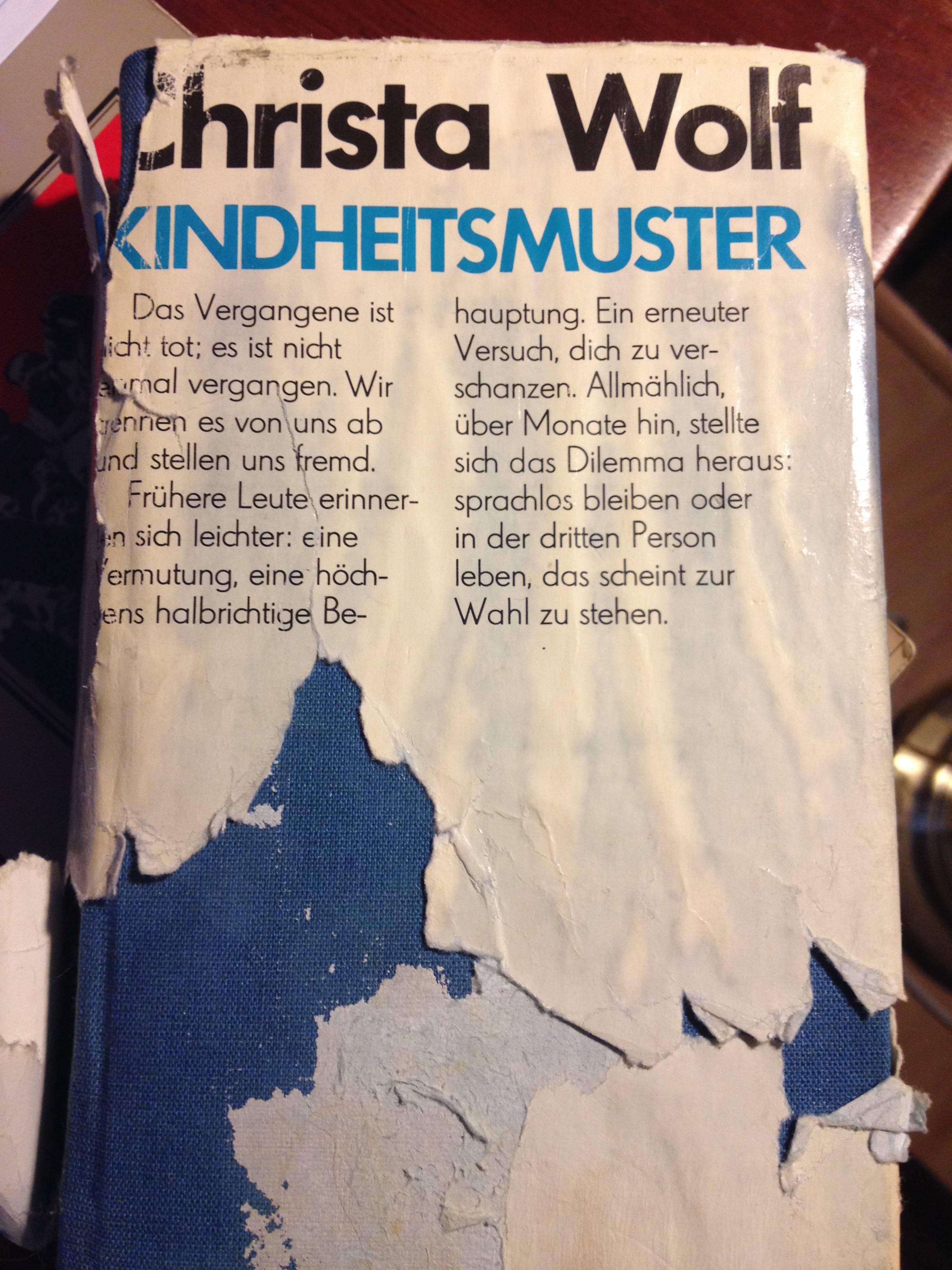
After a hiatus of six years, next semester I return to teaching autobiography.  The way in 2013-11-17 09.19.33which we make stories of our selves very much constituted my early publishing, whether my first article on the American Lebenslauf (memoir) or the translation of a collection of them for what has been my “best-seller”, Moravian Women’s Memoirs.  Since those early days, I have become fascinated by what I call the other side of memoir, how we reach the point of writing our selves; and in my seminar next semester we will be exploring that question to become not only critics of the genre but also authors.

It is not easy to write the self.  There are uncomfortable questions of authenticity, insight, truth.  So we look for examples of this uncomfortable process in authors whose autobiographical texts are not personal hagiographies or political hero-stories (although we read those too); we examine the making of who we are as being inextricably bound up with how we live in and with history.  In German, this concatenation of narrative and time is conveniently bound together in the one word, Geschichte. Continue reading “Writing the Self”

More than a point on a map…

At the Howland Preserve meeting on Thursday, Dave Buck reminded me of the question he posed back in 2006 at the first River Symposium.  I had just given a short paper on “Europeans and the Susquehanna River” that quoted the opening lines of a poem by the famous German poet Johann Wolfgang von Goethe, “Nicht am Susquehanna, der durch Wüsten fließt.”  At the time, I had just begun my work on the Shamokin Diaries and was immersing myself in the world of the Moravian missions in Pennsylvania.  He asked if I had ever heard of “Friedenshütten,” a mission on the North Branch near Wyalusing.  I replied that I had but was not that familiar with it.  Dave, in his usual dogged fashion, pursued me after the session and explained where the mission was supposed to have been and that it was linked to one slightly further up the North Branch, Sheshequin.  And so my curiosity was piqued. Continue reading “More than a point on a map…”

Visualizing Connections…

Over the last five years, my work in the archives of the Moravian Church in the USA and also Germany, has focused on the Moravian mission to the Native Americans in Pennsylvania during the 18th century.  The primary focus has been on the Moravian mission at Shamokin, Pa (now Sunbury), which sits at the confluence of the North and West branches of the river and which, in the contact period, was known as the “capital of the Woodland Indians”.  Continue reading “Visualizing Connections…”

A Meeting at the Howland Preserve: or, Moonrise over Mile Marker 223.5

Another trip upriver to a beautiful spot on the North Branch, the Howland Preserve on the Vosburg Neck, just north of Tunkhannock, where Alf Siewers and I met with a great group of people interested in joining us in telling the story of the river.  Ably led by Dave Buck of Endless Mountain Outfitters, the agenda was clear.  Let’s get moving! Continue reading “A Meeting at the Howland Preserve: or, Moonrise over Mile Marker 223.5”

The Place of Tunkhannock in the Cultural History of the Susquehanna River

Yesterday I made my way up roads that were once Indian paths to one of my favorite places in North East Pennsylvania, Tunkhannock (click for ppt presentation).  The invitation to speak on the cultural history of Tunkhannock and its place on the Susquehanna River came from Margie Young, Program Coordinator of the Wyoming County Cultural Center/Dietrich Theater and was supported by the Pennsylvania Humanities Council.

Continue reading “The Place of Tunkhannock in the Cultural History of the Susquehanna River”